Wednesday, June 21, 2023

A Message of Thanks

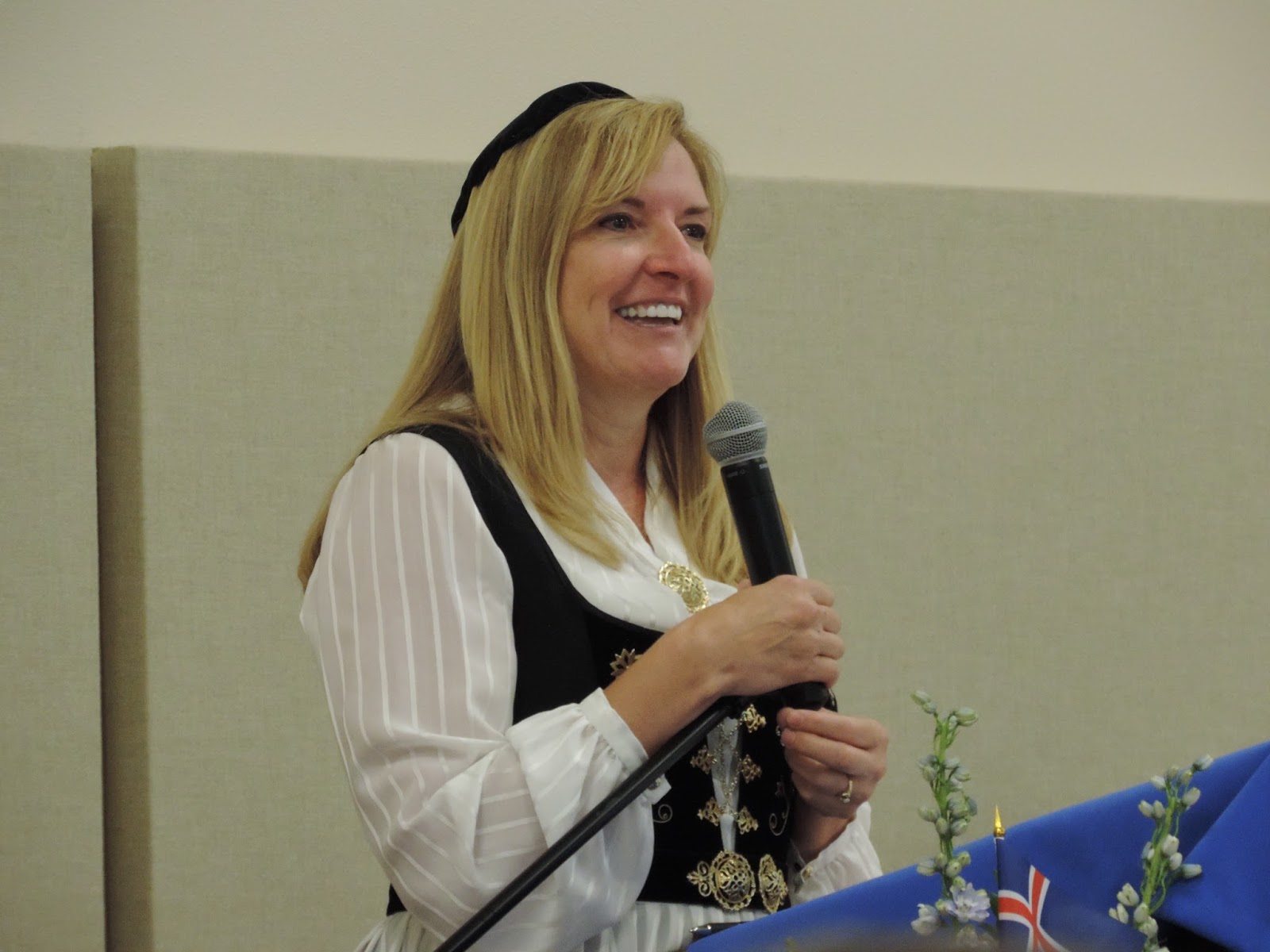
My message of thanks at the Convocation Dinner of the University of Winnipeg, which was held at the Winnipeg Art Gallery – Qaumajuq on Monday, June 19, 2023:

We have so much to be thankful for this evening as we gather for dinner in the midst of the 122nd Convocation of the University of Winnipeg. Varied paths through life have led us here, weaving together different vocations and diverse experiences, and yielding an almost unimaginable bounty for our common table.

We give thanks for wise teachers and earnest students, for the privilege of living in a society which values education and the examined life. We give thanks for the efforts of those who established the founding colleges of the university, and for the faithful stewards who kept them strong and transformed them into an eminent university. We acknowledge the First Peoples upon whose land our campus stands, knowing that the quest for Truth is our lesson and Reconciliation is our aspiration. We pay tribute to those who have distinguished themselves by their accomplishments and we honour all who have lived their lives in humble but meaningful ways.

We give thanks in particular for our honorary degree and fellowship recipients, those receiving faculty and staff awards, and our distinguished alumnus. They have all made a profound difference for the better in a world that has benefited from their wisdom and experience, leadership and devotion. The excellence they have modelled is something to which we all aspire

As we gather amidst this bounty, let us remember that we live in a world that is far from equal and often embroiled in conflict, where the want of many stands in sharp contrast to others’ privilege. May we resolve to take the lessons we have learned, distilled through experience into wisdom, and apply them to the needs of the Earth that is our home.

Finally, we give thanks for the food we are about to enjoy and the pleasant company we expect to share throughout the evening. We are truly blessed, and for all this we are abidingly grateful.


The University of Winnipeg – 122nd Convocation


Thursday, November 19, 2020

Sculptor Bertel Thorvaldsen at 250

A visual artist who played duets with Mendelssohn, a commoner who held the king of Bavaria in thrall, a largely unschooled man who drew the attention of Sir Walter Scott, and a Lutheran who won papal commissions, sculptor Bertel Thorvaldsen was the most sought after Icelander of the 19th century. Today, 250 years after his birth, his bronze self-portrait is the only statue of a sculptor in a New York City park, standing in the East Meadow of Central Park. This statue shows him standing with his 1817 creation, Hope. “In essence, Thorvaldsen created a sculpture of a sculptor sculpting a sculpture,” in the words of one commentator.

Bertel Thorvaldsen's self-portrait
leaning on the goddess Hope.
Bertel Thorvaldsen was born at Grønngade 7 in Copenhagen on November 19, 1770, the son of an Icelandic woodcarver, Gottskálk Thorvaldsen, and his Danish wife, Karen Dagnes (sometimes referred to as Karen Grønlund, which may derive from a household where she worked as a servant). Bertel’s paternal grandfather was Rev. Þorvaldur Gottskálksson, priest of the church at Miklabær in Blönduhlíð, and his great-grandfather, also called Gottskálk, was known as a gifted woodworker and artist. Following Þorvaldur’s death, the younger Gottskálk and his siblings, Ari and Ólöf, moved to Copenhagen, although his sister appears to have later returned to Iceland. Gottskálk earned his living as a woodcarver, creating ornamentation for ships, and Bertel initially followed in his footsteps.

Growing up, he was “somewhat lazy and indifferent” as a student under the tutelage of Rev. Christian Frederik Høyer, a teacher and chaplain at Holmens Kirke, who nevertheless sat him at the head of his class after Bertel won a silver medal from the Royal Danish Academy of Art. A ship’s captain persuaded his father to let him study art on a part-time basis and Bertel won additional awards and recognition, and he was finally awarded a scholarship to study for three years in Rome. He arrived there on March 8, 1797, speaking only Danish, and while he was somewhat popular, he wasn’t especially productive. As the time for him to return to Denmark approached, having accomplished nothing, he began work on a model of Jason, which he destroyed. He made a second model and, on the very day he was to leave, he received a commission from Sir Thomas Hope to carve Jason in marble.

Instead of returning home, he remained in Rome for nearly another four decades, establishing himself as the leading sculptor in Europe. The commissions flowed in and he established a large studio with several apprentices to keep up with the work. Under the patronage of Baron Herman Schubart, Denmark’s ambassador to Naples, Bertel gained access to many of the leading personalities of the day. “He became a great favorite and was lionized by the ladies,” according to Hólmfríður Danielson. “This is not so strange for although he was almost totally without a formal education, he was by now well self-educated, and his grace and charm of manner made him a delightful companion.”

Ceramic replicas of Thorvaldsen's bas-reliefs
are often found on old Icelandic graves,
such as this depiction of Summer in
the churchyard at Tjörn on Vatnsnes
He visited Denmark in 1819, touring the continent en route, and was received as a national hero. While there, he received the commission to create the statuary for Vor Frue Kirke (Church of Our Lady), the new national cathedral erected to replace the one that had been destroyed when the English Navy attacked Copenhagen in 1807. This led to his Christus and the twelve apostles, as well as a baptismal font that he created as a personal gift for the cathedral. 

Bertel Thorvaldsen is remembered as an exemplar of the neo-classical tradition. Hómlfríður Danielson observed that “although Thorvaldsen was undeniably bound by tradition and a classicist in his art there was a rich creative element in his handling of the subject matter, which is evident in his works.”

In 1837, Bertel gave his personal collection of his work to Copenhagen – a collection consisting of about 150 statues, 200 busts, and 350 bas-reliefs. He returned to the city to live in 1839. A campaign was launched to build a suitable facility to house the collection and the Thorvaldsen Museum was opened in 1848. Back in Copenhagen, Bertel lived in a flat at Charlottenborg Palace, the home of the Royal Danish Academy of Art, which he served as a councillor. His household included two widows, one of their daughters, and a young sculptor. He died on March 24, 1844, and his remains are entombed in the courtyard of the museum.

Describing the sense of awe inspired by Bertel Thorvaldsen’s work, Hólmfríður Danielson eloquently wrote: “As we stand in awe and admiration before the greatest works of arts we are lifted up into a higher sphere, as it were, and we realize that too much and too often we are concerned with the trivial, the petty things of life, instead of opening our minds to the lasting beauties that have been created by God and by man.”


Wednesday, November 18, 2020

Matthías Jochumsson, Iceland’s national poet and hymnist

Naturally enough, one of the most familiar Icelandic songs to the ears of people of Icelandic descent in North America is the country’s national anthem, Ó guð vors lands, which is routinely sung at community gatherings. It is a hauntingly beautiful tune and, while most English-speaking descendants don’t understand the words, it’s common to see people standing a little more erect when the crescendo arrives with “Íslands þúsand ár” – “Iceland’s thousand years!”


Ó gud vors lands was composed as a hymn to mark the millennium of the settlement of Iceland in 1874. It was played publicly for the first time on August 2 that year in Dómkirkjan, the National Cathedral, where the congregation included King Christian IX, who was on a royal visit to present Iceland with a new constitution. The lyrics, which are based on Psalm 90, were written by Rev. Matthías Jochumsson, a popular minister, poet, and playwright, while the tune was composed by Sveinbjörn Sveinbjörnsson (1847-1927), a onetime theology student who turned to the study of music. The anthem came together in Edinburgh, Scotland, where Matthías was visiting Sveinbjörn, who was living there at the time, although there is good reason to believe that Matthías had already been working on the poem while still in Iceland.


Rev. Matthías Jochumsson died a century ago – on November 18, 1920 – a week after his 85th birthday, on which the University of Iceland honoured him with a doctorate of theology. He was only the third recipient of such an honour from the university.

Matthías was born on November 11, 1835, at Skógar in Þorskafjörður, a now abandoned farm at the entryway to the Westfjords. The son of Jochum Magnússon and Þóra Einarsdóttir, he grew up in relative poverty and intended to pursue a career in business, attending a commercial college in Copenhagen and working as a shopkeeper at Flatey in Breiðafjörður. He enrolled in Latínuskólann in Reykjavík (now Menntaskólinn), where he was one of the older students among his peers, before proceeding to Prestaskólinn, the theological college.


Matthías began his ministry at the churches in Brautarholt and Saubær, both on Kjalarnes, north of Reykjavík, which he served from 1866 until he went abroad in 1872. Returning to Iceland in 1874, he worked as editor of the newspaper Þjóðólfur until 1880, when he resumed his ministry at the churches at Oddi and Keldur in Rangárvallasýsla. In 1886, he accepted a call to the church at Akureyri, where he remained until his retirement in 1899. Matthías was one of the most liberal Icelandic ministers of his generation, holding Unitarian theological views while remaining within the Lutheran Church of Iceland, paving the way for the Ný guðfræði – the “New Theology” that dominated the Church of Iceland during the first half of the 20th century.


While still a student, he wrote the play Útilegumennirnir (The Outlaws), better known today after its lead character, Skugga-Sveinn, which remains among the most popular dramatic works in Iceland. He was also a prolific translator of poetry, prose, and plays, and his work includes the standard Icelandic versions of Shakespeare’s Hamlet, Macbeth, Othello, and Romeo and Juliet. In addition to writing his own hymn texts, he translated or interpreted the hymns of others, the most noteworthy examples being Hljóða nótt (one of the Icelandic versions of Silent Night) and Ó þá náð að eiga Jesú (What a Friend We Have in Jesus).


Matthías was married three times, but his first two wives, Elín and Ingveldur, died tragically young – losses that had a deep impact on this sensitive man’s life and worldview. (His first marriage lasted less than a month; his second, less than a year.) In 1875, he married Guðrún Runólfsdóttir, who was nearly 16 years younger than him, and they had 11 children, all but two of whom lived to adulthood.


He was well travelled for an Icelander in the 19th century. He attended school in Copenhagen during the winter of 1856 to 1857 and lived abroad in Denmark, Norway, and the United Kingdom from 1872 to 1874. He also travelled in retirement, visiting Scandinavia in 1905 and 1912. His most memorable adventure abroad, from the perspective of North Americans, was his trip to participate in the World Parliament of Religions during the Chicago World’s Fair in 1893, which was followed by a tour of the Icelandic communities in the Upper Midwest and Western Canada. In fact, he was the featured speaker at Íslendingadagurinn in 1893.


While Matthías is most widely remembered for his national anthem, he is more fully recognized as one of the literary giants of 19th century Iceland – a great poet and playwright, an inspiring educator and religious leader, and a profoundly sensitive soul.


Monday, January 28, 2019

Rebelling against crap

"In the EU and at least 18 U.S. states, regulators are starting to listen and considering proposals that address the impact of planned obsolescence by making household goods sturdier and easier to mend, reports the BBC," according to Fortune magazine. 

Our economic system rewards manufacturers for making crap, protects their unfair proprietary "rights" through regulation, and then allows them to abdicate responsibility for the costs to both the environment and the economy when built-in obsolescence takes over and their spent products end up in landfalls. And while both present-day consumers and future generations pay the price for this, giant corporations take their profits to the bank.

My grandmother had a lightbulb in her front hallway that was there when she and my grandfather moved into their house in 1940; it was still there when my mother sold her house in 1970. That may have been unusual longevity, but when I compare it to the squirrelly bulbs I now have to buy which are supposed to last for 18 years but rarely last for 18 months, it speaks to the quality of manufacture. Another illustration is the basement fridge that my mother bought used or reconditioned in 1967 that was still keeping the beer cold in 2012 when we sold her house. Manitoba Hydro would have paid her $50 to carry it away and get a more energy efficient model, but how much energy is wasted by sending processed metal and plastics to the landfill?

Major appliances, computers, televisions, automobiles, furnaces, furniture, clothing – everywhere we turn, we've happily substituted quality for crap. And the planet in increasingly buried in our waste.

The 'Right to Repair' Movement Is Gaining Ground and Could Hit Manufacturers Hard

Saturday, December 01, 2018

The ongoing struggle for independence

Iceland wasn’t the only country to achieve its independence in 1918, but it is the only country to win its national sovereignty that year and succeed in maintaining both its independence and territorial integrity to the present day. Other countries that reckon milestones of independence in 1918 include Armenia, Azerbaijan, Austria, Czechoslovakia, Estonia, Georgia, Hungary, Latvia, Lithuania, Poland, Ukraine, and Yemen. Yet none of these other countries has been continuously self-governing over the century that followed. Although Iceland was occupied by Britain and then the United States during World War II, it remained sovereign and self- governing during those years and actually took the final step of independence by declaring the republic in 1944. 

Fullvedishátið 2018 (Marino Thorlacius / Ministry of Foreign Affairs)
Noting that both Canada and Iceland achieved their independence “without revolutions of bloodshed in either country,” former President of Iceland Ásgeir Ásgeirsson said, “we may rejoice wholeheartedly in this good fortune. In Iceland the restoration of independence was made possible by the unbroken continuity of our history.” The peaceful birth of both countries, through evolution and negotiation, appealing to persuasive arguments rather than force of arms, were noteworthy achievements in the annals of human history. Northrop Frye referred to Canada as a “peaceable kingdom,” drawing upon an idea that had been popularized among theologians in the 19th century, and the same might be said about Iceland from the time of its independence in 1918 until it became a republic. 

In 1974, Haraldur Kröyer, who was Iceland’s ambassador to the United States and Canada at the time, said, “The struggle for national independence did not end in 1918, nor in 1944. That struggle is still going on. A people’s fight for its right of existence as a nation, for its economic independence and political sovereignty is a never-ending struggle.” He went on to say, “We, who inherited Iceland from those who brought it beyond the threshold of political and economic independence, must ask ourselves today how we have guarded the heritage entrusted to us.” 

The simple fact that Iceland is the only country to achieve sovereignty in 1918 and maintain it bears witness to Haraldur Kröyer’s insightful observation. Independence is not a once-and-for-all achievement, but an ongoing struggle. Political democracy demands the active participation of its citizens; we cannot abdicate the responsibilities of citizenship to the few, especially those who mistakenly believe they know better than the collective will of the people. Economic independence demands hard work and resourcefulness, combined with fair play and equity. National sovereignty demands a willingness to pay the price needed to sustain the institutions of government through taxation and sometimes even personal sacrifice. 

Whatever shortcomings and disappointments there may have been along the way from sovereignty to the present day, when Icelanders ask themselves how they have guarded the heritage entrusted to them, they can honestly answer that they have done as well as any nation – arguably better. Iceland remains a robust democracy that prizes equality, tolerance, fairness, decency, freedom, and democracy. Icelanders have used their independence well.

This post appears as the editorial in the December 1, 2018, issue of Lögberg-Heimskringla.

Iceland's centennial as a sovereign nation

The year Iceland achieved its sovereignty as a nation would have been memorable even without this milestone of independence. The early months of the year are remembered as the “Great Frost Winter” and the record low temperature that year has never been surpassed. The volcano Katla erupted on October 12, threatening the countryside with devastation for 24 days. Overseas, the Great War came to an end, leaving much of the European continent in ruins, even though the war had been good for the Icelandic economy owing to increased demand for exports from farms and fisheries. The Spanish flu that gripped the world arrived in Iceland by ship on October 19, infecting nearly two-thirds of the residents of Reykjavík over the span of six weeks and resulting in the deaths of nearly 500 people, mostly in the southern and western regions of the country. 

In the summer of 1918, a joint parliamentary committee of the Icelandic Alþingi and Danish Folketing met to work out the terms of an Act of Union. The resulting treaty opened with the declaration, “Denmark and Iceland are free and sovereign states in union under the same king.” The next four articles established the succession to the crown and other provisions regarding the royal family. Article 6 provided that, “Danish citizens shall enjoy in all respects the same rights in Iceland as Icelandic citizens born there, and vice-versa,” while exempting the citizens of each country from military service in the other, and the following article provided that Denmark would continue to administer foreign affairs on behalf of Iceland at the direction of the Icelandic government. The remaining articles of the 20-article treaty dealt with transitional matters regarding the protection of territorial waters, supreme court jurisdiction, financial arrangements, procedures for approving the treaty, the establishment of a parliamentary consultation committee, a dispute resolution process, and provisions for renewing or repealing the treaty. 

Fullveldisdagurinn in 1918, outside Stjórnarráðhúsið.
Following passage by the two parliaments and the overwhelming approval of Icelanders in a referendum on October 19, the very day the flu arrived in the country, the Act of Union came into force on Sunday, December 1, 1918, and Iceland became a sovereign nation. The ceremony declaring Iceland’s sovereignty was a modest affair, but it was a bright, sunny day when of officials gathered outside Stjórnarráðhúsið (Government House) to mark the occasion – and the significance of the day was observed in churches across the land, including the National Cathedral. 

“We can assume that most of those who gathered at Government House – a building which had been a Danish jail, then the residence of Danish governors – looked hopefully to the future,” suggests President of Iceland Guðni Th. Jóhannesson, an esteemed historian. “That cannot be proved, of course, but contemporary accounts and memoirs give that impression. And no doubt those people hoped above all to be able to make a better world for themselves and their children, in a sanctuary of security, happiness and autonomy.” 

What occurred in Iceland in 1918 is comparable to what Canada had earlier achieved on July 1, 1867. Speaking at the University of Manitoba in 1961, Ásgeir Ásgeirsson, who was President of Iceland at the time, said, “When the British North America Act came into force, in 1867, and Canada gained independence, we Icelanders cited this event as an argument in our struggle for independence and Iceland received its own constitution a few years later, in 1874, on the millennium of the settlement of the country. Since then the political history of Canada and Iceland have run a similar course. ... These developments have taken place without revolutions of bloodshed in either country.” 

“Gaining sovereignty boosted the Icelanders’ vitality and audacity, giving rise to advances which took us from poverty to prosperity with astounding speed,” says Einar K. Guðfinnsson, former Speaker of Alþingi and chair of the parliamentary committee overseeing the centennial. “Now, when we celebrate the centenary of Icelandic sovereignty, we should look back, bearing in mind the words of poet Einar Benediktsson about the need to ‘look to the past in order to build something new.’” 

Prime Minister Katrín Jakobsdóttir observes that much has changed over the course of the past century and she questions whether modern Icelandic values are the same as they were a century ago – a reasonable question given the pace of change. Beliefs about national governance, cultural identity, language, the nature of society, and stewardship of both land and sea have evolved over time and anniversaries of noteworthy historical events offer opportunities for reflection and refinement. “We must seize the opportunity offered by this milestone, the centenary of Icelandic sovereignty,” says the prime minister, “to reevaluate and reinforce our shared values: to build on the strong foundation we have, and the ideal of a free and democratic society where human rights are honoured, equality of opportunity is ensured, and we safeguard the wellbeing of all the people of this country. Democracy, freedom, equality and justice are values that unite the sovereign nation of Iceland, which nurtures its land and its language, and also celebrates diversity and difference.” 

This post appears on the cover of the December 1, 2018, issue of Lögberg-Heimskringla.

Thursday, May 24, 2018

A conspiracy of ravens

For some time, a pair of ravens has been nesting in the steeple of the Gimli Unitarian Church, much to the delight of people passing by – especially visiting Icelanders, it seems – and much to the annoyance of people who care about practical matters, like compromised shingles and moisture damage. I mistakenly thought they were crows until someone who knew better told me to take a closer look. Church leaders once had the nest removed by the Gimli Fire Department, hoping the ravens would make themselves a home in a better neighbourhood – a tall tree somewhere – but they returned and it is hard to escape believing that they’ve somehow become attached to the place.

Whatever the reason for the ravens’ staying power, having watched David Suzuki’s episode of The Nature of Things that examined the superior intelligence, memory, and remarkable ability to recognize human faces on the part of their cousins, the crows, I’m reticent to upset any members of this branch of the bird family and risk their ire, having seen what they can do to people who offend them. I used to fantasize about seeing a steeple without a nest, but “corvicide” is now out of the question because, while a group of crows may be called a murder, a group of ravens is known as an “unkindness” or a “conspiracy” – and I’m not inclined to tempt fate by inviting either. People love them and they’ve waged a very successful publicity campaign in recent years, having become the subjects of feature stories in newspapers along with favourable mentions on radio and TV. They have become inescapable tenants.

I suspect that the reason visiting Icelanders, in particular, appreciate seeing them nesting on the steeple is that Icelanders, alongside North America’s Indigenous people, have an inordinate fondness for ravens (and even their close cousins, crows) which figure positively in the folklore of both people. In pretty much every other culture, these birds are viewed with disdain, but not among Icelanders and Indigenous people. I’ve stopped sharing my former desire to get rid of the nest with visitors from Iceland, since they have universally expressed their disapproval at the very thought of it, some suggesting that we should consider the ravens’ presence to be a good omen. It should be remembered, though, that these are the same people who compliment me on the dandelions in my lawn, sometimes expressing their envy that I’m so fortunate as to enjoy the beauty of such an abundant crop of wildflowers in my own yard. What can you really expect from people who think that eating putrefied shark and fermented rams’ testicles is a good idea?

The more strident raven-lovers from Iceland have reminded me that there are folktales and poems about clergymen who have run afoul of ravens nesting in their churches, warning me that I do not wish to share their fate. Ravens can be harbingers of kindness and wisdom, but also death and destruction. Choose kindness and wisdom, my Icelandic friends and family seem to be saying.

As it turns out, I’ve developed a growing fondness for both ravens and crows. At our country home, Huldukot, the ravens and crows visit in alternating conspiracies and murders. (That sounds rather ominous, doesn’t it?) Cindy has noticed that when I’m sitting at the dining room table and these birds see me, they call to me to bring them peanuts. She has also noticed that I seem to respond to their calls faster than one of Pavlov’s dogs. So I now welcome each murder and conspiracy as it arrives without any hint of unkindness. And I’m looking forward to seeing the resident ravens of the church welcome people to Gimli from its steeple this summer.

The author with the raven's nest in the steeple behind him.


This post appears as the editorial in the May 1, 2018, issue of Lögberg-Heimskringla.

Tuesday, April 17, 2018

What's your one Icelandic book?

Last year, Condé Nast Traveler reported that the language learning platform Babbel had asked several ambassadors to the United States to name the one book each would recommend for first-time visitors to read before traveling to their home countries. Twenty-two diplomats responded and, looking over the titles they suggested, my initial reaction was to think: never ask a diplomat for a book recommendation.

That said, the best answer was clearly offered by Iceland’s ambassador to the United States, Geir H. Haarde, who recommended Halldór Laxness’s classic, Independent People. After all, Laxness is Iceland’s only Nobel laureate – so far – and most literary critics consider Independent People his finest work, even though it received mixed reviews from Icelanders when it first appeared. I would personally argue that World Light and even The Fish Can Sing are superior works, but I readily concede that’s a matter of taste.

Recommending Independent People strikes me as a safe choice – one could fairly say it was a perfectly diplomatic recommendation. I can hardly imagine anyone (except me) arguing against it – but I will. Don't get me wrong – I love Independent People and almost everything ever written by Halldór Laxness – but I consider it advanced reading, something for the second- or third-year student of Icelandic literature, not the proper text for a class called “Introduction to Visiting Iceland.”

For Americans on their way to Iceland for the first time, I am inclined to recommend Bill Holm's The Windows of Brimnes, an affectionate portrait by a man who deeply loved both lands. For visitors of Icelandic ancestry, Sally Magnusson's Dreaming of Iceland reveals the country through the eyes of those of us who learned about it from the stories of our parents and grandparents and great-grandparents. If you’re more into short stories, W.D. Valgardson’s “The Man From Snæfellsnes” (in two parts) from What Can’t Be Changed Shouldn’t Be Mourned offers an excellent primer for the diaspora Icelander returning “home.”

Specialists might wish to read something that intersects with their interests. Both naturalists and language majors would be moved to read Charles Fergus’s Summer at Little Lava while anthropologists and sociologists might want to consider Karen Oslund's Iceland Imagined. Historians and criminologists might opt for Dominic Cooper's Men at Axlir or Hannah Kent's Burial Rites, which give an accurate flavour of life in past centuries. For psychologists and humourists alike, Einar Már Guðmundsson's Angels of the Universe might inspire them to wonder about everyone they meet on the streets of Reykjavík. 

Now, I understand the desire to read native Icelandic fiction. Several great books immediately leap to mind: Þorbergur Þórðarson's The Stones Speak, Guðbergur Bergsson's The Swan, Gunnar Gunnarsson's The Good Shepherd, Svava Jakobsdóttir's The Lodger and Other Stories, or (for a bit heavier read) Guðmundur Kamban's The Virgin of Skálholt. 

And before anybody posts something silly in their social media feed about Icelanders and their habits, they should read any one of Alda Sigmundsdóttir’s “little books” – especially The Little Book of the Hidden People. But any of her books, which are all treasures, can save you from the most common clichés about Iceland.

If one must read Laxness, then The Fish Can Sing might be a better first choice, unless one is a theologian, in which case Under the Glacier might be a better pick ... except for liberation theologians, who should go with The Atom Station. Poets might prefer World Light, however, while political scientists should consider the merits of Iceland's Bell.

Once someone has visited Iceland and come face-to-face with the character and peculiar humour of the Icelandic people, then – and perhaps only then – will they really be ready to read Independent People. A friend of mine who is widely read once told me that it was the most depressing book he had ever encountered, which caught me by surprise, since I find it overflowing with that dry humour that is so characteristic of Icelanders. He had read it as a tragedy, whereas I see it as a droll commentary on the Icelandic character, more comedic than tragic. I realized then that a person needs to know Icelanders firsthand before they are capable of fully appreciating Independent People. It’s not a novel for beginners.

Perhaps editors are no better at recommending books than ambassadors. If it hasn’t occurred to you already, I find it difficult to name the one book everyone should read before visiting Iceland. Iceland’s history is too long, its geography too amazing, its people’s opinions too broad, and its culture too deep for any one book to capture the essence of the land and its people. 

If you had to choose, though, what’s your one book that speaks of Iceland?


This post appears as the editorial in the April 15, 2018, issue of Lögberg-Heimskringla.

Tuesday, October 31, 2017

There he stood: 500 years after Martin Luther’s protest

Five hundred years have now passed since that seminal moment on October 31, 1517, when legend says Martin Luther posted what came to be called the Ninety-five Theses on the door of the castle church in Wittenberg, Saxony, a town of fewer than five thousand souls at the time. Although some historians have disputed the details of the story that has grown up around that event, there can be no dispute that what unfolded in the aftermath was one of the most dramatic stories in human history. Whatever else happened that day, it is certain that Luther wrote a letter to his superiors denouncing the sale of indulgences and soliciting their repayment, to which he appended his now famous theses (that is to say, propositions) on the subject. This act of conscience led directly to the Protestant Reformation, a religious transformation that reached the shores of distant Iceland some twenty years later.

Martin Luther in Wittenberg
(Photo - Andreas Breitling / Pixabay)
Indulgences were thought to be a means to reduce the punishment one would have to undergo in the afterlife because of one’s sins in this life. They also happened to be an important source of revenue for the church. Luther found the practice repugnant, having come to the view that forgiveness came through God’s grace, not the purchase of others’ surplus merit.

Luther had already been preaching against indulgences and other corruptions of the church, so the content of his theses was hardly news. However, this event did mark a turning point and has since been reckoned as the beginning of the Reformation. Luther shared his theses with a few bishops and friends, they were published using the relatively new technology of printing, and they subsequently came to the attention of the Pope, who directed his bishop to rein in the protesting monk.

At the Diet of Worms in 1521, where Luther had been summoned to defend his position, he declared: “Unless I am convinced by scripture and plain reason – I do not accept the authority of the popes and councils, for they have contradicted each other – my conscience is captive to the Word of God. I cannot and I will not recant anything for to go against conscience is neither right nor safe. God help me. Amen.” Although this differs from the common paraphrase of his words – “Here I stand; I can do no other” – it was an equally powerful moral statement and a measure of his courage in a moment of great threat to his own wellbeing.

When Luther left the room, he said, “I am finished,” which seemed obvious to everyone, and he was granted three weeks’ safe conduct to return home, where it was expected he would face the common fate that awaited heretics in that day. Following his departure from Wörms in the company of the nobles who supported him, the emperor declared Luther an outlaw, but Elector Friedrich the Wise staged a kidnapping and Luther was whisked away to safety in the castle at Wartburg, perched high above the town of Eisenach, where he lived incognito as Junker Jörg (George the knight) for nearly a year. While there, Luther translated the New Testament into German, a task he accomplished in just eleven weeks.

As it turned out, Luther was nowhere near finished. Indeed, history makes it clear that he had only just begun. By the time he returned to Wittenberg, the Reformation was well underway, forever changing the face of Christendom.

Friday, September 15, 2017

What the University of Winnipeg Means to Me

Personal reflections on the 50th anniversary of 
the University of Winnipeg
receiving its Charter from the Province of Manitoba.

I come from a long line of people who earned their living with their hands, by the sweat of their brows – farmers, carpenters, weavers, and mechanics mostly. There was also a brewer or two and at least one outright bootlegger. Save for members of the clergy who pop up every few generations, and a couple of scholars in the dim reaches of the past, I don’t have many ancestors who went on to higher learning after having convinced their priest or pastor that they were worthy of being confirmed, which generally meant demonstrating they were literate.

I have one 5th-great-grandfather who attended the University of Copenhagen to study art and another who attended cathedral school for the same purpose. One 3rd-great-grandfather studied agriculture, also at the University of Copenhagen, and another in the same generation attended theological school. My father studied commerce at the University of Manitoba and he had two uncles who were college educated, both of them teachers, along with a few of his cousins. That’s pretty much it. Over the span of two centuries, there wasn’t much in my family to suggest that higher education would be my destiny, although I assumed from an early age that I would attend university.

Wesley Hall, heart of the University of Winnipeg campus.
Although I recall looking at the brochures of a few universities, I somehow always knew that I would study at the University of Winnipeg. It was certainly conveniently located – about a 15-minute bus ride from my childhood home – and it seemed the least intimidating for someone who had spent most of his childhood attending a smaller school, but it was my great-uncle and godfather, Axel Vopnfjord, who had the greatest influence on my decision. Uncle Axel graduated from Wesley College, one of the founding colleges of the University of Winnipeg, in the class of 1923. Next to my father, he was pretty much the wisest person I knew at the time.

It helped that the university was still home to a high school and that students who enrolled there were allowed to also enrol in university courses. Having fallen just short of graduating from St. James Collegiate, I completed the last part of grade 12 at the University of Winnipeg Collegiate while beginning my university studies. I planned to study political science on my way to law school, but I became drawn towards anthropology instead. Sadly, my father died suddenly during my first year at university and the stress of earning a living was added to the usual challenges faced by any student. Looking back, I realize I was depressed. During my second year, I stopped attending classes and began working fulltime. 

I married, became active in the Unitarian church, gave up politics (for a while), lost one job when the company I worked for was sold, and started another in a completely different field. My minister, John S. Gilbert, tried to convince me that my gifts would never be fully realized unless I returned to school. Four years after leaving school, I returned to classes by enrolling in “Western Thought in the Making,” which was taught by Mac Watts. By the end of the term, I had switched my major once again, this time to religious studies, and embarked upon the long journey of earning a degree while working fulltime. Ten years after I started, I graduated with my Bachelor of Arts degree and proceeded immediately to a master’s program. 

Once again, the path proved to be circuitous but, after another nine years, I received my Master of Divinity degree, having also graduated from the certificate in theology program along the way. All told, I’ve graduated from the University of Winnipeg four times, earned two academic medals, and benefited from bursaries, scholarships, and the forbearance of my wife, Cindy. 

Along the way, my professors influenced me deeply – Tom Graham and Carl Ridd, John Badertscher and Kay Stone, Harry Loewen and George Epp, Paul Trudinger and Eleanor Stebner, Harold King and Mac Watts, and several others. If anyone had mapped out the journey for me beforehand, I never would have started, but my experience as a student at the University of Winnipeg shaped me profoundly and I wouldn’t have become the person I am without it.

Years after graduating, I returned as a volunteer for the University of Winnipeg Alumni Association and was honoured to have served as its president. It is now my privilege to serve on the Board of Regents. Beyond contributing to the University of Winnipeg Foundation, these are small but tangible ways for me to express my gratitude for the incomparable education I received, the patience and support of my beloved professors, and the countless ways in which the university transformed my life for the better.


This post appears as the editorial in the September 15, 2017 issue of

Monday, July 17, 2017

Going to the Woods

In his iconic memoir, Walden, Henry David Thoreau wrote, “I went to the woods because I wished to live deliberately, to front only the essential facts of life, and see if I could not learn what it had to teach, and not, when I came to die, discover that I had not lived.”

This same aspiration is what led my wife Cindy and me to acquire a cottage near Lake Winnipeg a dozen years ago – a country home that has proven to be a year-round retreat and not simply a place of summer respite. We both tend to work long hours and our modest cottage, which we dubbed Huldukot, offered the promise of a break from the pace and demands of urban life. Hidden in small grove of ash, birch, and spruce – a short walk from the lake – it is almost like entering another world.

Like Thoreau, I embraced our second home in the woods in an effort “to live deliberately” – to relax and regenerate, recover and be restored, and not, “when I came to die, discover that I had not lived.” I had great plans to read books that had nothing to do with work, play my ukulele, visit with family and friends, ride my bike, and stroll along the water’s edge – maybe even dip into the lake from time to time.

The reality, though, is that I’m not very good at it – taking a break, that is. Every weekend, I tote my laptop computer along with me and, tethered to my phone, carry on pretty much the same as I do back in the city. I don’t disconnect much at all. At the same time, the satellite dish ensures that I can maintain a steady diet of cable news and mind-numbing electronic entertainment. During the summer months, I preach every second week or so at the nearby Unitarian church, which means that Saturdays are often spent revising and refining my sermon. I suppose that Thoreau had his own work to do – fishing, gardening, chopping wood – but a nagging voice in the back of my head tells me he was probably better at relaxing.

So this summer I resolve to do it right. If I’m going to go to the woods, I’m going to be there fully and not just carry on the same as I always do with a change of venue. I’ll continue to show up to lead church services, but the sermon is going to have to be done on Friday. I’ll still bring my laptop along, but I plan to leave it in my bag while the sun is shining. And this summer, I’m going to play the ukulele and ride my bike, but not at the same time. I’m going to live deliberately and relax with intention.


This post appears as the editorial in the July 15, 2017, issue of Lögberg-Heimskringla.

Saturday, July 01, 2017

150 Years of Confederation

On the first day of 2017, CBC ran a story headlined: “Canada is celebrating 150 years of … what, exactly?” It was accompanied by a short video asking, “how old is Canada, really?” The video reminded viewers that Canada’s Indigenous people have lived on this land for thousands upon thousands of years and then offered a series of milestone events in the evolution of the country we now know as Canada.

In 1701, the British Crown entered into the first of many treaties to encourage peaceful relations between Indigenous people and European settlers and the Royal Proclamation of 1763 established the principles by which the Crown could acquire land from First Nations. These milestones are of enduring significance but there was, as yet, no Canada. A few point to 1840, when the Act of Union brought together Lower Canada (now Quebec) and Upper Canada (now Ontario) into a single Province of Canada as the real beginning of Canada, but I’m not convinced.

Most Canadians reckon 1867 as the year in which Canada was born and so, a century later, Canadians enthusiastically celebrated 1967 as the country’s centennial and, this year, most people will mark its sesquicentennial. Yet, Canada as we know it a far different country in 2017 than it was in 1867 – and not just because of the advance of technology and the accumulation of history. Canada is more truly independent today than it was then and, as significantly, the nature of its people and culture is markedly different. So it is that, while we celebrate the 150th anniversary of Confederation, Canada remains a work in progress.

In the years leading up to Confederation, Sir John A. Macdonald, who emerged as its leading proponent and became the first prime minister of Canada, addressing the many challenges then faced by the British colonies in North America, declared: “The only feasible scheme which represents itself to my mind as a remedy for the evils complained of, is a confederation of all the provinces.” His efforts, in collaboration with the other Fathers of Confederation, led to the passage of the British North America Act, which created the Dominion of Canada, a union of four provinces that has since grown to ten provinces and three territories.

Since then, there have been several milestones through which Canada became progressively more independent, including the Statute of Westminster in 1931 and the patriation of the Constitution of Canada in 1982. Along the way, British nobles gave way to Canadian citizens as governors general, Canada adopted a flag of its own, and O Canada replaced God Save the Queen as the national anthem. Canada became a self-governing country in 1867 but the process of becoming a country is something that has never ceased. This reflects the dynamic and evolving nature of Confederation itself. Like our personal identities, the development of a country’s identity takes time.

In his insightful book Blood and Belonging, Michael Ignatieff wrote: “Federalism is not a political ideology. It is just a particular way of sharing political power among different peoples within a state. But it is nationalism’s political antithesis. Those who believe in federalism hold that different peoples do not need states of their own in order to enjoy self-determination. Peoples who share traditions, geography, or common economic space may agree to share a single state, while retaining substantial degrees of self-government over matters essential to their identity as peoples. Federalism is a politics that seeks to reconcile two competing principles: the ethnic principle, according to which people wish to be ruled by their own, with the civic principle, according to which strangers wish to come together to form a community of equals, based not on ethnicity but on citizenship.” This understanding is behind the development of Canada as a unified and collaborative country with more than one language and a rich multicultural mosaic.

Ignatieff went on to assert that, “if federalism can’t work in my Canada, it probably can’t work anywhere.” This country is rich in resources, abundant in opportunities, flexible and pragmatic in its social attitudes, and possessed of democratic institutions that provide for the orderly and mostly fair management of competing interests.

Beyond all of this, though, there is a distinctive and unifying Canadian spirit that we often fail to appreciate. As Robertson Davies once said, “I am convinced that Canada has a soul, and should get on better terms with it, because at the moment it is a sadly neglected part of our inheritance.” Behind Confederation there is a spirit of hopefulness, tolerance, inclusivity, pragmatism, and a concern for the common good that, when practiced, gives strength and shape to our country.

In the early days of Confederation, Sir John A. Macdonald said: “No one can look into futurity and say what will be the destiny of this country. Changes come over nations and peoples in the course of ages.” For 150 years, Canadians have faced the challenges and negotiated the many changes that have been necessary to maintain the “peace, order, and good government” of this diverse but unified country. The efforts of past generations have shaped “the True North strong and free,” in reality as well as in song, and we continue to shape this inheritance and add to it as we move towards the unfolding future. This is an achievement worth celebrating.

This post appears as the editorial in the July 1, 2017, issue of Lögberg-Heimskringla.

Saturday, May 20, 2017

A Word of Appreciation

As in previous years, the awards ceremony at the 98th annual convention of the Icelandic National League of North America highlighted the brilliant array of contributions to the wellbeing of the Icelandic community by the various individuals who were recognized. It was moving to listen to each award’s presenter, read about each honoree in the program, and then listen to recipients express their thanks for their award when, in point of fact, it should have been us thanking them.

Healthy organizations recognize and appreciate the good work of their leaders and other volunteers, so it’s heartening to see the efforts the INLNA puts into acknowledging them through the Laurence S.G. Johnson Lifetime Achievement Award, its honorary memberships, and the new Joan Inga Eyjolfson Cadham Award for contributions through literature, arts and media. As in the past, this year’s worthy recipients earned their awards through hard work and dedication – some locally, some regionally, some internationally.

When the ceremony was over, however, I found myself wondering why we sometimes wait so long to publicly appreciate the work of our leaders. I’m thinking here about public institutions and voluntary associations in general, not just the INLNA or its member clubs. I was reminded of a deceased ministerial colleague who used to ask why honorary degrees were given out towards the end of their recipients’ careers when it would have been better to have honoured them somewhere closer to the midpoint.

Our society’s wellbeing is dependent on the contributions of countless individuals who step forward to offer leadership in the public arena, most on a purely voluntary basis, and I’m struck by how quick we can be sometimes to demand more or criticize imperfections while being much slower to offer words of appreciation. Gratitude is a spiritual discipline that seems to be in short supply these days and it is best cultivated through conscious inner reflection and outward expressions of appreciation.

So I’d like to thank the board of the Icelandic National League of North America as well as the board of its partner in the old country, Þjóðræknisfélag Íslendinga, for their indefatigable efforts on behalf of our shared Icelandic culture and heritage, both individually and collectively, not to mention the energy they put into bringing our communities together to “connect the pieces.” I’m not prepared to wait until their efforts are just one part of a lifetime achievement – I want to thank them now. And, while I’m at it, I’d like to extend my appreciation to the Icelandic Communities Association of Northeast North Dakota for organizing a magnificent convention this year.
Sunna Furstenau, President of the
Icelandic National League of North America

I would especially like to highlight and celebrate the extraordinary leadership of the INLNA’s president, Sunna Furstenau, who is surely one of the most remarkable leaders in the league’s nearly century-long history. The energy, enthusiasm, and organizational skills she brings to her work, including both a robust vision and attention to detail, are rarely found in a single individual. Add to this her grace, positivity and tenacity, and you have a force that’s as powerful as a prairie windstorm and as gentle as a summer breeze.

I don’t quite fathom how Sunna juggles it all. In addition to guiding the work of the INLNA, she has led the development of Icelandic Roots from a simple genealogical database to a comprehensive cultural institution, strengthened ties between North America and Iceland, visited numerous Icelandic communities, supported local initiatives and international programs, and she has still found time to be a devoted spouse, mother and amma. She has both a deep sense of her roots and an expansive imagination, which are reflected in her creativity and drive.


No institution lasts forever without reinventing itself. Indeed, voluntary associations need to renew their vision and clarify their purpose every generation or their existential clock will begin ticking. In Sunna Furstenau, the Icelandic National League of North America has a once-in-a-generation leader whose presence has helped to reinvigorate the league and reset its clock. Our appreciation of Sunna’s leadership shouldn’t wait for some far-off awards ceremony. We should appreciate it and offer our gratitude now.

This post appears as the editorial in the May 15, 2017, issue of